EcoWest News, August 18, 2026
Welcome to EcoWest News, a weekly round-up of news and resources that you can put to use in addressing environmental issues and protecting the wild in your community.
Butterflies
This year’s wet, hot summer on the Prairies appears to be helping endangered Monarch and other butterflies with gardeners reporting a greater number of caterpillars, chrysalises, and butterflies. [CBC]
Roughly 1 in 10 of the world’s butterfly species have changed their range in response to climate change and habitat loss. “Butterflies are early warning indicators … If their ranges are shifting this dramatically, it signals profound changes across ecosystems.” [Anthropocene]
Forests
Restored forests and wetlands can look healthy, but mosses, lichens, and other understory plants may be missing as they take decades to recover after a clearcut. [CBC]
Water
Salmon need a diverse natural habitat. Off-channel wetlands and floodplains are important for juvenile coho, while cooler groundwater-fed side channels provide spawning habitat for chum. Deep pools act as safe havens during storms. [Vancouver Sun]
The Alberta Lake Management Society has launched the Algal Bloom Tracker, providing near real-time monitoring of harmful algal blooms for six Alberta lakes. [Algal Bloom Tracker]
Alberta landowners are ringing the alarm bell about how much water oil and gas companies are drawing from the Prairies' most significant source of groundwater. [The Narwhal]
Florida plans to establish a coastal corridor, a connected network of artificial reefs, oyster beds, seagrass, and mangroves on which marine life can thrive, along the Atlantic and Gulf coasts. [Mother Jones]
Energy
Manitoba Hydro says it needs to add 3 new natural gas turbines to its generating station in Brandon to reduce the potential for midwinter shortages. Critics point out the plant’s maximum power output had to be reduced during 3 out of 10 past winter peaks as the turbines underperform during cold snaps. [CBC]
We Can Do Better
Oil companies are bringing in record-breaking profits amidst the Iran war. Municipal leaders, unions, and community organizations are calling for a windfall profits tax to help with the cost of living and support decarbonization efforts. [The Narwhal]
The BC government is targeting a priority old-growth deferral area, wildlife habitat area, recreation reserve, and critical spotted owl habitat for logging. [The Tyee]
“Without broader government economic policy aligning incentives with mitigating climate risk, the financial sector will never overcome short-term profit motives and won’t redirect capital from fossil fuels toward climate solutions at the scale or speed necessary.” [Policy Options]
The first legal challenge against a 107-km road into Ontario’s Ring of Fire region is raising questions about whether separate assessment of 3 road segments will accurately capture the road’s cumulative impact. [The Energy Mix]
Making a Difference
Illinois plans to deploy solar panels on storage facilities across the state. “Once completed, the portfolio will cover 5 million square feet of roof space, provide 44 megawatts of solar capacity, deliver $36 million total savings, and create 300 construction jobs”. [Mother Jones]
Smart blue roofs control the release of rainwater on flat-roof buildings by holding rainwater until it evaporates, sending rainwater to a harvesting tank where it can be reused, and slowly releasing it into the municipal stormwater system. [Credit Valley Conservation]
The mayor of Chicago has directed a task force to work on tighter regulations restricting data centres’ air and noise pollution, tempering water and energy usage, and preventing utility bill spikes. [Inside Climate News]
Nature’s Wonders
BC’s Favourite Bee of 2026 is the Death Camas Mining Bee who raises her young entirely on pollen that would kill most other insects who dared to eat it. [Native Bee Society of British Columbia]
Six mind-bendingly amazing facts about invertebrates – from shrimps who are faster than a speeding bullet to sea urchins who can drill through stone with self-sharpening teeth. [The Guardian]
Admire these award-winning photographs of the dark skies above and the oceans below. [Capture the Dark, Ocean Photographer of the Year]
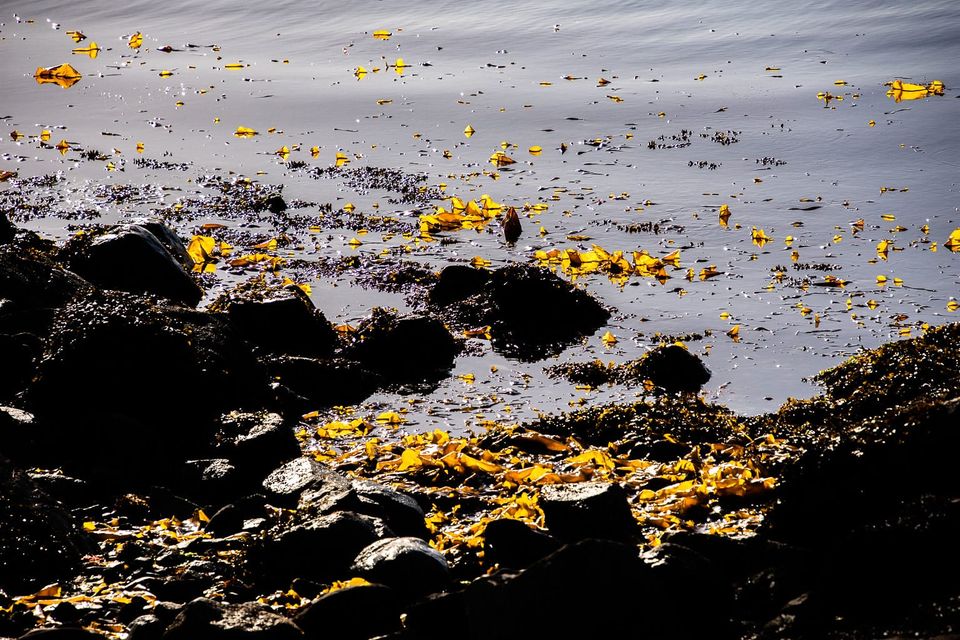
Photo credit: https://www.flickr.com/photos/apmckinlay/44979306664
EcoFriendly West informs and encourages initiatives that support Western Canada’s natural environment through its online publication and the Nature Companion website/app. Like us on Facebook, follow us on BlueSky, X, and Mastodon, or subscribe by email.
Member discussion