
EcoWest News, August 11, 2026
Welcome to EcoWest News, a weekly round-up of news and resources that you can put to use in addressing environmental issues and protecting the wild in your community.
Building for a Better Future
“We’re not ready for a positive future … because we’ve never built for one.” Conservation science is organized to document loss. To solve the crisis, it must be accompanied by a science of recovery. [Conservation Works]
The Climate Joy Project celebrates everyday people who are building a better future in Ashland, Oregon. Each interview introduces someone who is putting climate solutions into practice, through clean energy, local food, transportation, community organizing, or simply finding a meaningful way to contribute. [Climate Joy Project]
Brent Preston, president of Farmers for Climate Solutions, says, “We can’t wait for crop failures and disasters and then just pay out afterward … We need to look at the root causes – look at the threats that we’re facing from climate change, from increasing input costs – and work on preventing those losses from happening.” [The Energy Mix]
Near Minnedosa, MB, 950 acres of wetlands and uplands are being restored to create a thriving landscape for waterfowl, wildlife and people. Ducks Unlimited will then resell the property with conservation safeguards attached to the title. Revenue from the sale will be reinvested in future restoration projects. [Ducks Unlimited]
Environmental Impact Assessment
The Canadian Society for Ecology and Evolution (CSEE) argues exempting large projects from scrutiny under the Impact Assessment Act will reduce the ability to identify environmental risks before construction begins and eliminate opportunities to redesign projects to avoid or minimize harm. [Daily Commercial News]
Victoria Goodday, Wildlife Conservation Society Canada, says, “The goal should be better decisions earlier, not weaker decisions faster … The way to improve the process and actually eliminate risk and uncertainty for proponents is to deal with ecological risk early.” [The Energy Mix]
Mining
The Alberta Energy Regulator has approved a major expansion of the Vista thermal open-pit coal mine on the Eastern Slopes. The “approval authorizes significant new mining areas, additional tailings infrastructure, expanded wastewater management facilities”, and will further contaminate the McLeod River watershed. [CPAWS Northern Alberta]
“Sponges form living reefs 10,000 years old, sharks can live to 600 years old, and rockfish can live more than 200 years.” They adapt on geological time scales and won’t survive the effects of deep-sea mining. [The Tyee]
But Does It Work?
DarkSky International and its allies are asking FCC to reverse its approval of the Reflect Orbital space mirror, which is designed to sell sunlight after dark. The reflected light could cause eye injury in a fraction of a second, pose a safety risk to aircraft, disrupt nocturnal wildlife, and affect human health. [DarkSky]
Making a Difference
Solar car parks can generate electricity without taking up additional land, provide sheltered parking, and pair well with EV charging. [EuroNews]
Cumberland’s coal mines fuelled Vancouver Island’s economy for over 80 years. Now the community is looking to a future built on clean energy drawn from the abandoned mine shafts and tunnels beneath its streets. [The Energy Mix]
EV sales (cars, trucks, school buses) are ramping up but won’t be successful without trained technicians to maintain and repair them. Colleges are stepping in to fill the educational gap. [CBC]
A livestream from Barkley Sound on the west coast of Vancouver Island documents Ocean Wise employing targeted sea urchin harvesting to try to restore a previously thriving giant kelp forest. [YouTube]
Coexistence
Haines Junction sits in one of Yukon's densest grizzly bear corridors. Indigenous Knowledge and decades of prevention are helping people and bears coexist. [The Narwhal]
After 74 wind turbines were installed on pronghorn winter habitat in Wyoming, the animals didn’t abandon the area, but they did use it differently, spending more time in quieter areas farther away from the turbines. [The Pulse]
Nature’s Wonders
“Hidden within even the world’s densest cities, connecting trees, window flowerboxes, parks and gardens, are a complex series of roads you won’t find on any map … They’re the paths pollinating insects take to travel from meal to meal.” Every green space, no matter how small, will help insects to make the journey. [Cool Green Science]
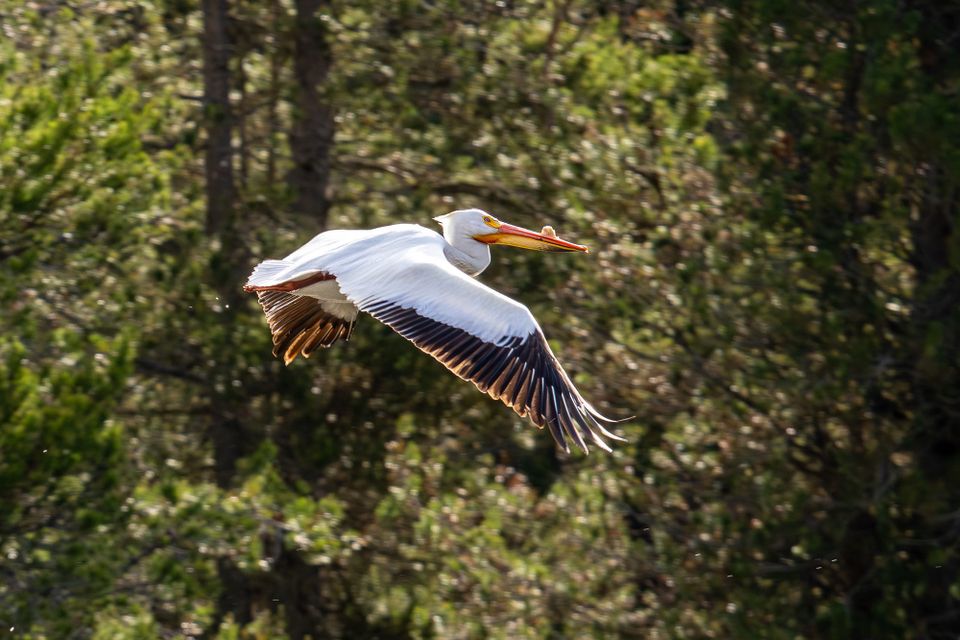
Photo credit: https://www.flickr.com/photos/apmckinlay/55375007325/
EcoFriendly West informs and encourages initiatives that support Western Canada’s natural environment through its online publication and the Nature Companion website/app. Like us on Facebook, follow us on BlueSky, X, and Mastodon, or subscribe by email.
Member discussion