
Book Reviews: Nature is Messy: Disreputable, Least Loved Animals at the Margins of our Lives
Three authors set out to provide a different perspective on the creatures that share our world.
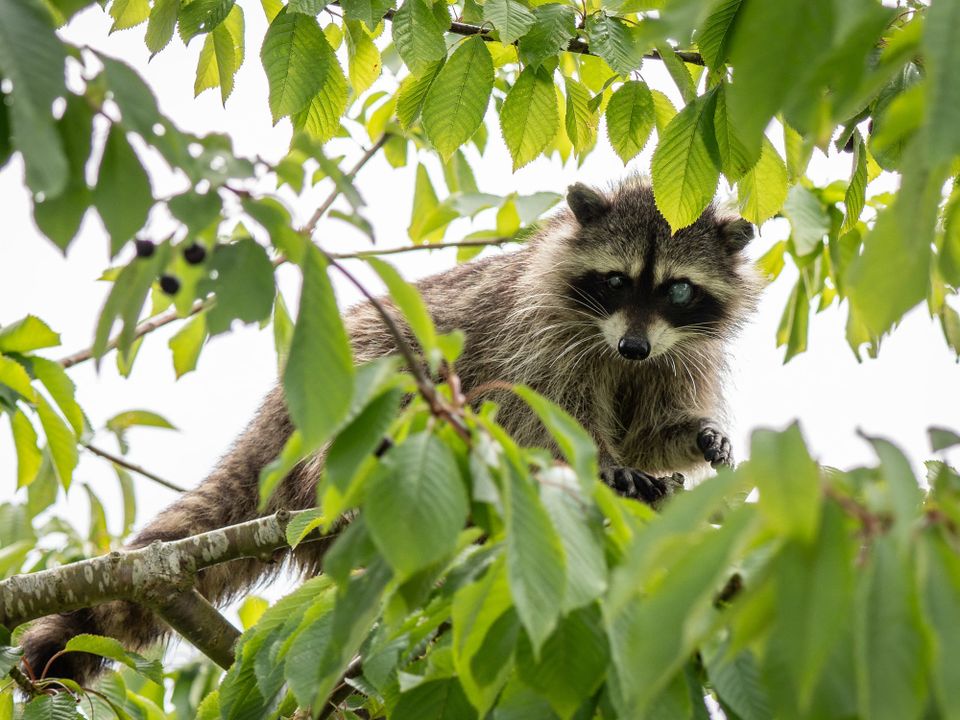
Outsider Animals: How the Creatures at the Margins of our Lives Have the Most to Teach Us by Marlene Zuk investigates outsider animals such as raccoons, coyotes, rats, gulls, and cockroaches, “creatures that can intrude upon our lives and that may use our food or our buildings but that don’t need us to survive. They live on the margins of our lives, sometimes obvious and sometimes not”.
Jo Wimpenny says she wrote Beauty of the Beasts: Rethinking Nature’s Least Loved Animals, “to shine a light on the creatures that are hated, reviled, scorned or simply overlooked … I’m aiming for greater tolerance, whether that comes through recognizing their right to life or recognizing their importance to us”.
Joe Shute, author of Stowaway: The Disreputable Exploits of the Rat, adopted two rats because he “wanted the opportunity to study rats up close, to see the characteristics that inspired such antipathy in so many humans and, if I am being honest, myself. I wanted to examine and if possible conquer my own fears and know what it felt like to touch that curved scimitar-shaped tail, to feel those enlarged, tendon-rippled feet clambering up my arm and whiskers tickling my cheek.”
Boundaries – What Boundaries?
Jo Wimpenny points out that “we demonise foxes and spiders for entering our homes or gardens, even though these ‘invaders’ have no concept of the boundaries that they are supposed to respect. Then, hypocritically, we expect other animals to tolerate our disruptive presence in their territories, punishing them for acts of self-defence”. [Beauty of the Beasts]
We began to draw boundaries when we started keeping animals and growing crops, setting aside parcels of land for humans and domesticated animals where wildlife didn’t belong. “Our ideal city has become a place which is ‘orderly and sanitized, with nature subdued and compartmentalized’. In these environments, acceptable animals fit into certain categories. Our chosen companions are kept in our homes and gardens, while the animals that we choose to view for pleasure are either confined to a zoo or live in an exotic location that we must travel to, separate from our living space. Other animals that live around us are acceptable if they are aesthetically pleasing, like songbirds or butterflies, or if they appear only transiently in our spaces, passing through on their way to another place. ‘Problem’ animals are labelled as such because they don’t fit into these categories.” [Beauty of the Beasts]
The Good, the Bad, and the Ugly
As humans, we have a tendency to categorize animals. Pandas are cute, tigers are majestic, but slugs and toads are ugly. Some groups are working to combat this attitude. There’s a Crab Museum in Margate, UK, that rolls “science, humour and philosophy into a unique and satisfyingly baffling day out”. The Ugly Animal Preservation Society was founded by a biologist who runs comedy shows as a way to reach people who wouldn’t normally be interested in animals. The Hargila Army (Stork Sisters) celebrates the beauty of adjutant storks by weaving motifs of the storks into their traditional Assamese fabric, “blending their passion for conservation with fashion”. [Beauty of the Beasts]
Unexpected Riches
Most of us know very little about the other species that live around us.
“For instance, the cockroaches we see in our houses seem dull and brown, characterized mainly by being unwanted visitors. But did you realize that thousands of species of cockroaches exist? Most of those are not hanging around our garbage, and some of them, the wood roaches, are even monogamous, spending blameless lives in rotten logs as bonded couples. One species, the Cape Mountain cockroach, is native to South Africa, and the females give birth to live young, like mammals, rather than laying eggs.” [Outsider Animals]
Even the cockroaches living in our homes have superpowers and are “anatomical and physiological marvels, as you’d expect for a creature that can squeeze through the narrowest of gaps and scuttle up walls and ceilings … By flattening out their pliable exoskeletons, they can squeeze through gaps less than a quarter of their height (3mm) in just one second. They can run 50 body lengths per second (210 miles per hour for a human) and even when flattened to half their height they can still run at 20 body lengths per second. They can also withstand compressive forces of 900 times their body weight with no apparent ill effects.” [Beauty of the Beasts]
Rats like to be tickled and to play hide and seek. They can drive miniature cars by pressing the appropriate levers for moving forward and turning. In one experiment, the researchers found the rats “had an intense motivation for their driving training, often jumping into the car and revving the ‘lever engine’ before their vehicle hit the road”. [Beauty of the Beasts]
Thank You!
Humans often benefit in unexpected ways from creatures that we normally consider pests.
Magawa, an African giant pouched rat, was given a medal for his “life-saving devotion to duty, in the location and clearance of deadly landmines in Cambodia”. Magawa was part of a team of mine-detecting rats that have helped release more than 33 million square metres of land in Cambodia to make it safe for public access. In his prime, Magawa could search a football field’s worth of mines in 20 minutes, a task that would take a person with a metal detector an estimated 4 days to complete. [Stowaway]
“One of the things that makes social wasps fantastic apex predators in the garden is that they will fixate upon the most abundant prey species. That means that if cabbage white butterflies have had a bumper year and laid eggs all over your plants, the wasps will notice and they will focus on seeking out cabbage white caterpillars. Once they’ve caught all of those, their attention will shift to the next most abundant, and they’ll cream off the crop of those too.” [Beauty of the Beasts]
Snail ooze “forms the basis for an almost billion-dollar skincare industry … Mucin-based lotions are touted as moisturizing, full of antioxidants, and capable of stimulating new collagen”. [Beauty of the Beasts]
Snake venoms kill or injure hundreds of thousands of people every year, but they may also “provide the building blocks for life-changing new drugs”. [Beauty of the Beasts]
Language Matters
When they are young, children are curious about spiders, snakes, and other wildlife, but they quickly pick up on their parents’ and society’s distaste for certain creatures. Cartoons portray coyotes as mean and evil. Rats are portrayed as dirty, although they are in fact very clean. Predators hunt to eat, not because they are malicious or terrorists.
Part of the problem is that so many people now live in cities and have limited contact with wild animals. As a result, “urbanites are far more likely to learn about wildlife from indirect experience, such as online sources, television or podcasts. This opens the door wide to the spread of unreliable information and the propagation of myths or misconceptions.” Wimpenny is convinced that we can change the narrative, turning ‘weird’ into ‘exciting’ by starting when children are young and by educating the parents.
See Also
Wasps are a Useful Addition to any Garden [EcoFriendly West]
Coyote Neighbours [EcoFriendly West]
Book Review: Eight-legged Wonders: The Surprising Lives of Spiders by James O’Hanlon [EcoFriendly West]
Spiders: From Crabs and Wolves to Pirates and Paradise [EcoFriendly West]
Surprising Facts About Slugs & Snails [EcoFriendly West]
It’s Time to Show Mosquitoes a Little Love [EcoFriendly West]
Ants: Farmers, Herders, Recyclers, Distributors & Prey [EcoFriendly West]
Photo credit: https://www.flickr.com/photos/apmckinlay/55367648008
EcoFriendly West informs and encourages initiatives that support Western Canada’s natural environment through its online publication and the Nature Companion website/app. Like us on Facebook, follow us on BlueSky, X, and Mastodon, or subscribe by email.
Member discussion