EcoWest News, August 25, 2026
Welcome to EcoWest News, a weekly round-up of news and resources that you can put to use in addressing environmental issues and protecting the wild in your community.
Biodiversity
Dead logs and fallen trees act like “giant teabags”, leaching nutrients into the forest floor. [Sierra Club]
Roughly 1 in 10 of the world’s butterfly species have changed their range in response to climate change and habitat loss. “Butterflies are early warning indicators … If their ranges are shifting this dramatically, it signals profound changes across ecosystems.” [Anthropocene]
The Nuthatch app (iOS with Android coming soon) could come in handy if you’re planning a trip to Kananaskis. Nuthatch offers self-guided hikes with pictures, captions, and descriptive text telling you about the plants, fungi, animals, and rocks at stops along the way. [App Store for iPhone]
Transportation
Residents of Vancouver’s East Side neighbourhoods are concerned about the air pollution generated by heavy-duty, diesel-burning trucks heading to the city’s container terminal. 10 of Vancouver’s 89 public elementary schools are located within 300 metres of the truck route. [The Narwhal]
A scheme to cut car pollution in central London has restored normal lung growth among children. Deaths linked to toxic air have dropped by 40%. [Yale Environment 360]
Year-round shipping through the Port of Churchill might be feasible but could pose real risks to the landscape and wildlife. [CBC]
Housing
When people shop for a home, they focus on price, floor area, number of bedrooms, and location. Rarely do listings show how a home can shape a household’s carbon footprint through energy use and commuting. [The Conversation]
Urban Infrastructure
Metro Vancouver is spending billions to switch buildings, vehicles, and the power system to cleaner electricity but is failing to connect infrastructure investment and procurement with local businesses, research, work force development, and export opportunities. Better coordination could meet local energy needs while allowing the region to capture a larger share of the global clean energy economy. [The Energy Mix]
After the Flood: How Local Governments Are Reimagining Buyout Programs provides an overview of buyouts as an adaptation solution, their history and funding streams, implementation challenges, and innovative new approaches. [Urban Ocean Lab]
Advocacy
Ducks Unlimited Canada and the McKell family are suing the City of Regina over a proposed road extension they allege breaches a conservation easement protecting the McKell Wascana Conservation Park. [CBC]
Saskatoon grasslands advocates say “sustained investment, better public education, ecological monitoring and a commitment to restoration could give the remaining grasslands a better chance of surviving and potentially recovering for future generations.” [SaskToday]
A relay team is swimming 1,375 km down BC's Fraser River to increase awareness of the importance of protecting the Fraser watershed. “Being in the water changes everything … You can see the landscape from the point of view of something that lives on the water.” [CBC]
Youth Climate Lab is now offering a Capacity Accelerator Course, a 5-week professional development program designed for emerging NGOs, youth organizations, and grassroots initiatives. [Youth Climate Lab]
Identifying Alternatives
End-of-life solar panels could deliver almost $1 trillion in economic benefits if recycled properly. [Anthropocene]
Economist Mariana Mazzucato says culture is fundamental to tackling the climate crisis. Arts and creative practices have a huge impact on shaping what we think is possible. [Dialogue Earth]
Making a Difference
BC’s first all-electric hospital, Quw’utsun Valley Hospital on Vancouver Island, to be completed next year, is certified under the Canada Building Green Council’s Zero Carbon Building (ZCB) Design standard and it is targeting LEED V4 Healthcare Gold. [Journal of Commerce]
A BC First Nations is using wood waste to create an alternative to plastic packaging foam. Plans are in place to scale up to a larger facility. [CBC]
Nature’s Wonders
Unlike almost every other seabird, marbled murrelets fly inland (sometimes more than 80 kilometres) to ancient forests where they each lay a single egg on broad, moss-covered branches high in the canopy. [The Conversation]
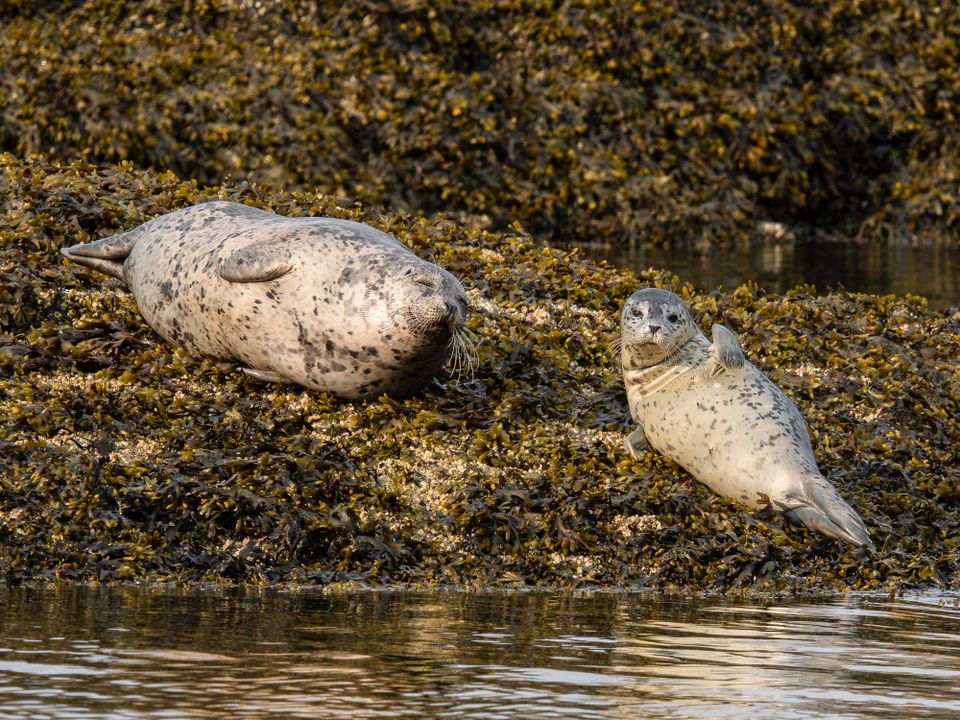
Photo credit: Harbour seal and baby https://www.flickr.com/photos/apmckinlay/55483168240/
EcoFriendly West informs and encourages initiatives that support Western Canada’s natural environment through its online publication and the Nature Companion website/app. Like us on Facebook, follow us on BlueSky, X, and Mastodon, or subscribe by email.
Member discussion