
Increasing Urban Green Space
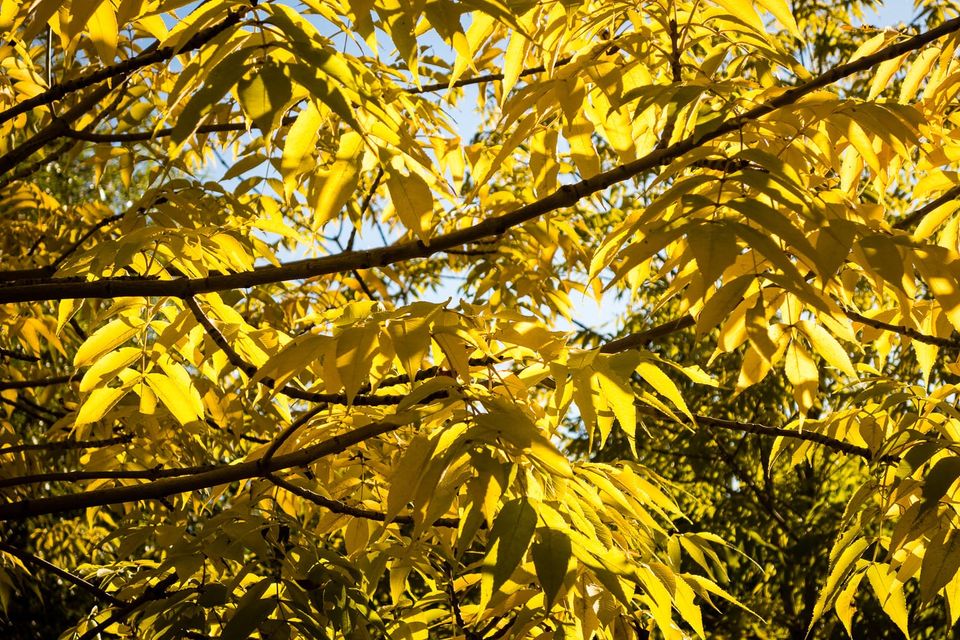
Cities, dense conglomerations of buildings and streets, are often short on greenery. But trees, shrubs, and green spaces play a pivotal role in maintaining a healthy urban environment. They lower the temperature, absorb stormwater, improve air quality, provide shelter and food for wildlife, and are good for mental health.
Assess and Measure
The first step towards increasing urban green space is to assess the situation and identify shortages.
Selkirk, Manitoba, prioritizes street tree planting locations through a scoring system that “considers a range of factors, including existing canopy coverage, stormwater system capacity, tree species diversity, road classification, current tree condition, and social equity” to ensure that new trees deliver the greatest environmental and community benefit. Kelowna has developed a tree-mapping tool that will soon be used in Vancouver.
Richer neighbourhoods frequently have more trees than poorer neighbourhoods. This is problematic as people in poorer neighbourhoods are less likely to have air conditioning. A study in Miami-Dade County “found that residents who lived in ZIP codes with the highest percentage of poverty rates and high daytime surface temperatures had three and four times more heat-related emergency department visits and hospitalizations.”
Yevhen Vasylenko, an environmental data scientist, has quantified Calgary’s microclimatic imbalance by calculating the ratio of high-thermal artificial surfaces to cooling tree canopy and has established that parks and trees aren’t distributed evenly across the urban landscape. While Calgary’s mature western neighbourhoods have Solid/Park and Forest ratios between 1.5 and 4, eastern and peripheral zones reach values from 10 to over 50.
Planting and maintaining trees can be expensive; however, “Canadian studies show that for every $1 invested in urban forest maintenance, municipalities receive between $1.88 and $12.70 in benefits annually, depending on the city and canopy structure.”
Increasing Urban Green Space: City Centres
An obvious place to start adding new green spaces is in heavily built-up city centres.
Paris, France, has transformed the square in front of the Hôtel de Ville, replacing almost a third of the pavement with trees and shrubs. The trees were chosen based on their resistance to heat and pollution and the density of their foliage.
With a compact city centre, Heilbronn, Germany, was unsure how to introduce more green space. “The city’s solution is “climate groves”, small densely planted green areas that boost biodiversity, cool the microclimate, and give residents some green refuge in the heart of the city.” A climate grove at the Delft University of Technology incorporates linear garden beds, 25 different trees, bee hotels, and water channels. They are also testing bioreceptive concrete, where they hope moss will flourish and relieve heat stress.
Singapore has prioritized green roofs as one way to add green space to a very built-up environment. Kampung Admiralty, an 11-storey building, offers lush greenery cascading from several floors. Incorporating a tropical forest, fruit trees, a pond, and community gardens, it’s a local biodiversity hotspot. A 2018 biodiversity audit identified 50 different species, including 19 bird and 22 insect species.
A mile-long park is being constructed along a highly polluted street in Amsterdam and will include two parks, 1600 square metres of green roof, green walls, and vegetated areas to improve water drainage.
Austin, Texas is developing cool corridors that combine trees, built shade, and cool pavements using energy-reflective coatings. They hope to align these corridors with new transit initiatives. Adding trees at bus stops significantly reduces the heat for people standing waiting.
Increasing Urban Green Space: Schoolyards
“If there’s any place where we would want to have the benefits of trees, it would be a school,” says Deanna Fourt, a researcher with Nanaimo Climate Action Hub. “Schools are in most neighbourhoods so that would give a cooling area for all the neighbourhoods too.”
Paris’s Oasis Schoolyard program has been greening the city’s schools since 2018. Their goal was to reduce the local heat island effect and to provide a neighbourhood cool space that also encouraged community interactions. As this video demonstrates, the schoolyards now include shade trees, plants and bushes, all kinds of playground equipment, and benches. Paris has also restricted vehicle access to the streets in front of the schools, increasing safety, reducing air pollution, and creating an area where teachers and parents can connect.
One Winnipeg schoolyard with a limited budget created cracks in the pavement where they planted trees and sowed grasses and native flowers. The cracks increase stormwater infiltration and provide insect habitat.
Increasing Urban Green Space: Churches
Churches can play a role in greening their neighbourhoods. Kitchissippi United Church turned a paved courtyard into an attractive entrance with seating and xeriscape/butterfly-friendly native plantings on all three sides. Centretown United Church in Ottawa installed community gardens on the sidewalk in front of their building. St. Augustine’s Anglican Church, Edmonton, is slowly rewilding their site with added trees, garden beds, gathering spaces, and a labyrinth.
Increasing Urban Green Space: Cemeteries
Urban cemeteries are a haven for plants and animals, often hosting more native species than urban parks. More than 600 species of lichen have been found growing on churchyard stone in England. Breeding populations of four native amphibians have been successfully introduced at Mount Auburn Cemetery, alongside three established amphibian species. The cemetery also functions as a botanic garden and arboretum.
112 mature elms line the Road of Remembrance in Saskatoon’s Woodlawn Cemetery, providing a shady walk on a hot summer day. In fact, cemeteries, with their old-growth trees, are often the coolest urban green spaces. Community gardens, on the contrary, are some of the hottest.
Communities such as Salt Spring Island are introducing green burial grounds that eliminate headstones, embalming fluids, concrete vaults, and non-biodegradable materials.
Increasing Urban Green Space: Community Initiatives
The Wild Cities project in East London, UK, brings together a coalition of ecologists, community growers, transit authorities, cultural institutions, football clubs, and residents intent on developing a 14-mile stretch of restored habitats to reconnect pollinators and wildlife through a network of community gardens, rooftops, canal banks, sports fields, and backyards.
Residents in New Haven, Connecticut’s underserved areas can request a street tree, free of charge, from a local initiative. Householders agree to water the tree for two years, and the tree team visits each tree within its first year to check for mortality or damage.
Fallen trees are often chipped and sent to the nearest landfill as waste, but not always. Some communities, including New Haven, are treating the timber as a resource that can be turned into nature play areas, public seating, lumber, or biofuel.
Depave Paradise is a Green Communities Canada project with groups across Canada ripping up unused pavement and planting gardens. Dutch towns compete in an annual competition to see which of them can get rid of the most paved infrastructure in residential gardens. Residents can also plant a strip of paving in front of their homes without asking permission and can apply to depave a larger area.
Trees are Critical Infrastructure
One of the most important steps municipalities can take in greening their community is to recognize trees as critical infrastructure.
Urban street trees need more space (e.g. on a wide boulevard rather than a sidewalk cutout) and more soil volume to survive long enough to provide significant benefits in terms of shade, biodiversity, and carbon storage. Douglas Justice, UBC Botanical Garden, says prioritizing water for trees is critical. “In a time of drought, do you want the trees to die, when they are the only things that are actually keeping the city cool? And the citizens who can’t afford air conditioning — we don’t want to have trees on the street? I think we need to understand how important it is to keep trees alive.”
It also pays to choose the right trees, for example, ones that provide plenty of shade and tolerate drought but don’t have aggressive root systems that will cause sidewalks to heave. Insects and microbes are building blocks for biodiversity, but not all trees are good hosts. “For example, European Hornbeam trees are often planted because they grow quickly, give good shade, can handle dry conditions and don’t get many diseases. However, this tree variety doesn’t offer good living conditions for native insects. It also doesn’t produce nectar, berries, or other things that nourish the city’s wildlife.”
Maintaining a vigorous urban forest also requires strong bylaws to protect existing trees on both public and private land. Developers should be required to protect existing trees and incorporate green space when undertaking new construction projects.
Further Information
Calgary’s Summer Heat: A 2025 Satellite Perspective [Yevhen Vasylenko]
Where Data Meets Sustainability [Calgary]
Tree-Mapping Tool Piloted in Kelowna is Expanding Across BC to Cool Down Cities [CBC]
Recommendations to Improve the Health of Vancouver’s Street Trees Surrounded by Hardscape [PDF, UBC]
The Secret Life of a Cemetery: The Wild Nature and Enchanting Lore of Père-Lachaise, Benoît Gallot [Greystone Books]
Wild Cities: Discovering New Ways of Living in the Modern Urban Jungle, Chris Fitch [HarperCollins]
Photo credit: https://www.flickr.com/photos/apmckinlay/21381961742
EcoFriendly West informs and encourages initiatives that support Western Canada’s natural environment through its online publication and the Nature Companion website/app. Like us on Facebook, follow us on BlueSky, X, and Mastodon, or subscribe by email.
Member discussion