EcoWest News, October 6, 2026
Welcome to EcoWest News, a weekly round-up of news and resources that you can put to use in addressing environmental issues and protecting the wild in your community.
Biodiversity
Insects, “the little things that run the world”, are more than just a food source for other creatures. They also offer protection, shelter, health, and sanitation. [The Guardian]
The Forest in the Trees explores a scientist's decades-long tree study and the wisdom it can provide for a society out of sync with the natural world. [15-minute video, YouTube]
Almost all lakes in North America have been exposed to wildfire smoke, many for a month or more. This reduces the amount of sunlight, impacting water temperature, respiration, and growth of algae and other water plants. Fortunately, the lakes seem to recover quickly. [The Narwhal]
Of National Interest
Pacific Link Pipeline: “Canada’s national interest is better served by accelerating work on interties to connect our fragmented provincial power grids, large-scale renewable power generation like the Churchill Falls dam and the Wind West offshore project, and by rapidly electrifying our homes and vehicles. Seizing the opportunities of the global energy transition requires the type of rapid action and large-scale investment that the federal government has committed to oil export.” [Pembina Institute]
Nature Conservation
Washington state is urging the Mark Carney government not to fast-track the new West Coast oil pipeline, saying shared waters are “too valuable” to expedite a project that could lead to a catastrophic oil spill and harm ecosystems and the maritime economy. [The Tyee]
Wolverines avoid areas with recreational activities and high road density. To support these small carnivores, we need to maintain roadless and low road-density areas, protect low-disturbance, high-quality wolverine habitat, and limit recreation in reproductive areas. [UCalgary]
A UK golf course has been turned into a 30-hectare wetland nature reserve. The site forms part of the East Coast Flyway, one of Europe’s key migratory bird routes. [Countryfile]
Making a Difference
The City of Hamilton, in partnership with the Hamilton Naturalists’ Club, has initiated a Backyard Tree Planting Pilot Program. Eligible residents receive a free professionally planted native tree to help expand Hamilton’s urban canopy, strengthen biodiversity, and support healthier, more resilient neighbourhoods. [Hamilton Naturalists’ Club]
The Tofino-area landfill is one of the first in Canada to ban neoprene wetsuits. Wetsuits will instead be taken to an upcycling program run by Surfrider Foundation Canada. [CBC]
TV renovation programs could encourage people to make energy-efficient upgrades to their own homes by embedding stories, data and references to our changing climate in mainstream media. [The Conversation]
We Can Do It
Canada can build EVs and make them more affordable by supporting domestic EV manufacturing, maintaining incentives that help households make the switch, and adopting a strong vehicle emissions standard that encourages automakers to bring more affordable models to Canada. [Pembina Institute]
DIY
“Now, more than ever, we need to be courageous in our convictions. We need to talk openly about the climate crisis, talk about climate change denial and talk about the causes being capitalism and colonialism.” [The Tyee]
If you see an animal mid-snack, snap a photo, and share it on iNaturalist. The information will be added to the interactive food web on Who Eats Whom. Enter the name of a species to see who it eats, or who eats it. [Grist]
Nature’s Wonders
“There’s more to bulking up than eating protein alone. Brown bears who nosh on both fruit and salmon may gain weight more rapidly than those who eat just salmon, and scientists in Alaska found that brown bears typically spend hours a day supplementing their fish meals with berries, even when salmon are abundant. A well-balanced diet, it seems, makes for the bulkiest of bruins.” [bioGraphic]
Some wild hairstyles, a snoring duckling, and a sexy mantis: enjoy the Comedy Wildlife award finalist photographs. [The Guardian]
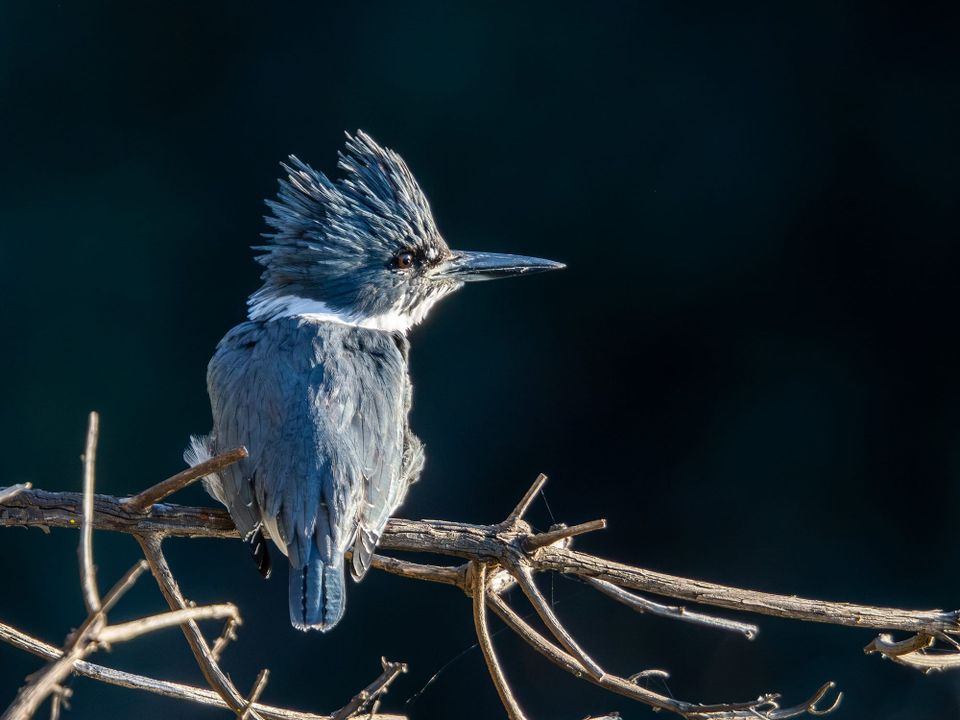
Photo credit: https://www.flickr.com/photos/apmckinlay/55569581870
EcoFriendly West informs and encourages initiatives that support Western Canada’s natural environment through its online publication and the Nature Companion website/app. Like us on Facebook, follow us on BlueSky, X, and Mastodon, or subscribe by email.
Member discussion